2 min read

Modern Receivables, Simplified: Why Financial Institutions Are Turning to an Integrated Approach

Modern Receivables, Simplified: Why Financial Institutions Are Turning to an Integrated Approach
Integrated Receivables Demo | CheckAlt
3:16

Receivables are becoming harder to manage across separate systems. See how an integrated approach brings those channels together for a modern treasury experience.

Financial institutions are under increasing pressure to support the many ways their commercial clients receive payments. Checks still arrive in the mail, digital payments continue to grow, and businesses expect faster posting, fewer exceptions, and better visibility across every channel. Yet many banks and credit unions are still juggling separate systems for lockbox, electronic lockbox, online payments, and remote deposit capture. The result is slower cash application, rising manual work, and fragmented client experiences. 

Integrated Receivables: The Unified Approach

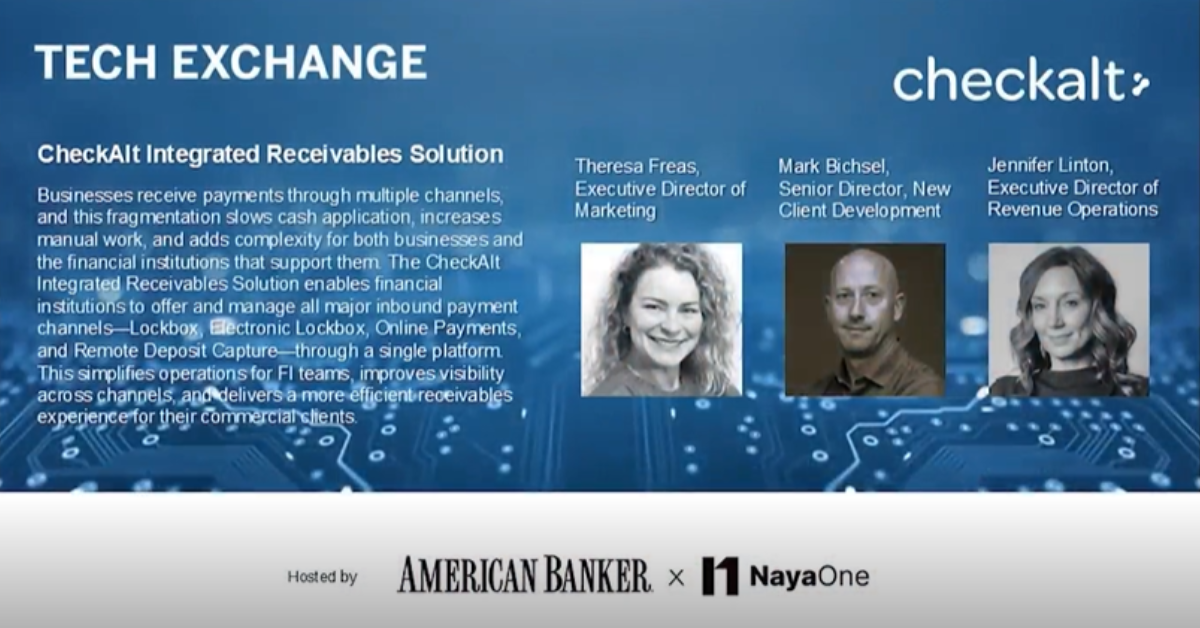
In a recent Tech Exchange webinar presented by American Banker and NayaOne, CheckAlt shared a demo showcasing how our Integrated Receivables solution enables financial institutions to access and manage key inbound payment channels—including lockboxelectronic lockboxonline payments, and remote deposit capture (RDC)—through a single platform. This unified approach simplifies day-to-day operations for FI teams, improves oversight, and delivers a more efficient receivables experience for commercial clients. 


The 
demo highlights several Integrated Receivables capabilities that help institutions reduce friction and modernize quickly: 

  • Automated onboarding cuts implementation time from weeks to hours, allowing treasury teams to take client lockboxes live more quickly using a templated, self-service setup. 
  • Configurable business rules significantly reduce exception rates and manual corrections. In one example, a client lowered its exception rate from 67% to 1% within days by applying advanced account validation rules. 
  • Institutions can self-manage client setup, security settings, branding, notifications, and workflow views in one place, giving teams more consistency and control across the receivables products they use.  
  • Teams can manage exceptions, load reference data, approve deposits, support mobile deposit capture, and oversee all receivables activity through a single, intuitive interface. By centralizing these actions, financial institutions gain stronger visibility and a more predictable, scalable operational model. 

Modernizing receivables doesn’t have to mean adding more tools—it means consolidating them. With CheckAlt, financial institutions can manage receivables across the channels they support more consistently, strengthening control while improving the experience for both internal teams and commercial clients. 

Take a Closer Look 

If you missed the live session or want to revisit the demo, we encourage you to watch the full replayIt’s a quick way to see how institutions are simplifying receivables workflows across channels—reducing manual work, improving visibility, and supporting a more modern approach to receivables operations. 


Ready to modernize your receivables operationsGet in touch with us today.While you’re at it, be sure to follow us on LinkedIn and subscribe to CheckAlt Connect, our monthly email newsletter, to keep on top of the latest in payments.    


Modern Receivables, Simplified: Why Financial Institutions Are Turning to an Integrated Approach

Modern Receivables, Simplified: Why Financial Institutions Are Turning to an Integrated Approach

Receivables are becoming harder to manage across separate systems. See how an integrated approach brings those channels together for a modern...

Read More
2025’s Top Insights: AI, Fraud, and Receivables Modernization

2025’s Top Insights: AI, Fraud, and Receivables Modernization

The Top 5 Most-Read Articles of the Year 2025 offered clear insight into what our audiences valued most: practical AI adoption, stronger fraud...

Read More
Understanding Gen Z Banking Preferences: What Financial Institutions Can Do to Stay Relevant

Understanding Gen Z Banking Preferences: What Financial Institutions Can Do to Stay Relevant

With Gen Z gaining financial independence, banks and credit unions face a generational inflection point. These digital natives—born between 1996 and...

Read More